‘Where People Meet’: Hubs for Health

‘Where People Meet’: Hubs for Health

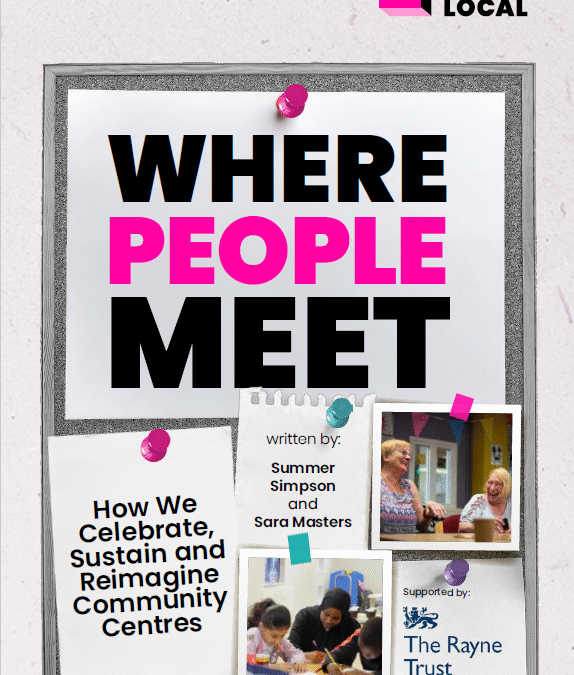
In the third of our series of blogs reflecting on the ‘Where People Meet’ report, Dame Clare Gerada, GP and former President of the Royal College of General Practitioners, shares her experience of community centres in supporting the physical and emotional health of communities.

I have been a general practitioner for nearly 40 years. When I first started practising, my area had access to a Community Care Centre, which played a vital role in the community for the next 20 years. This centre combined healthcare services for inpatients and outpatients with spaces for local residents to gather and a community restaurant that employed adults with learning difficulties. It was a crucial hub that strengthened the community’s social fabric, offering a wide range of benefits that enhanced quality of life. GPs from the whole area met to learn and discuss the challenges of delivering care.

Community-centred spaces serve as inclusive venues where people can meet, mix, and connect. They foster social cohesion and reduce loneliness by building social capital through meaningful interactions that bridge divides between individuals of different ages, classes, faiths, and ethnicities. Such connections promote a sense of belonging and civic pride, contributing to safer and more cohesive neighbourhoods.

Moreover, community centres play a vital role in supporting health and well-being. They offer fitness classes, mental health support groups, and social prescribing initiatives, addressing physical and emotional needs. By alleviating pressures on overstretched healthcare systems, these centres provide holistic, preventative care that tackles the root causes of health challenges, such as social isolation and unhealthy lifestyles.

Community centres are key players in local ecosystems, acting as strategic partners in place-based initiatives. They collaborate with local authorities, housing associations, and health services to provide targeted support, including food banks, employment programmes, and educational workshops. Their deep understanding of local needs enables them to respond effectively to various challenges.

Additionally, community centres enhance the local environment. Well-maintained, high-quality spaces can boost civic pride, provide access to green areas, and serve as cultural and social event venues. They contribute to economic sustainability through income-generating activities such as room rentals and community cafés.

In summary, community centres are more than mere buildings—they are dynamic and essential spaces that foster connections, enhance health, and empower communities to thrive. Their universal and preventive role makes them indispensable to society’s well-being. They are hubs of social connection, stewards of health and well-being, vital partners in local ecosystems, and important physical assets on which communities can rely.
‘Where People Meet’: Neighbourhoods need places to belong

‘Where People Meet’: Neighbourhoods need places to belong

In the first in a series of blogs reflecting on our ‘Where People Meet’ report, Matt Leach, Commissioner on the Independent Commission on Neighbourhoods, Interim CEO at the Building Centre and previous CEO of Local Trust, shares his thoughts about the importance of community buildings and the value of the New Local research.

Every so often, a report comes along that doesn’t just confirm what you already suspected, but gives it new shape, new language, and new weight.  Bringing together insight that resonates with what you’ve been seeing yourself, and saying things you feel need to be said.  ‘Where People Meet’ is one of those reports.

For the last six months, I’ve been doing a lot of travelling.  More so, even, than during my time as Chief Executive of Local Trust.  With Hilary Armstrong, David Halpern and other members of the Independent Commission on Neighbourhoods, I’ve been around the country, spending a lot of time in some of our most deprived communities and listening to the people who live there.  

Often on the edge of post-industrial towns and cities, these are places that were once thriving.  But when you listen to residents of those neighbourhoods – places like the Warwick Estate in Knottingley or Woodhouse Close in Bishop Auckland – you hear common stories.

Not just of industrial and economic decline, but also of the loss of the local institutions that shaped and helped build those communities.  The shared workplaces, trade unions, clubs, pubs and other gathering places that defined identity, fostered trust and shared social norms and, often, provided opportunities for mutual support when people most needed it.  And, often, the loss of that shared social life that existed in those communities is as mourned as much as the traditional industries that once used to power local economies.

These are places that have been too often ignored by decision-makers.   Economic policies haven’t delivered for them.  And (with the exception of the National Lottery-funded Big Local programme) the sorts of neighbourhood-based investment that might provide local people with the tools to help local areas deal with the aftermath of industrial decline have been off the political agenda since the days of the National Strategy for Neighbourhood Renewal and New Deal for Communities.  People in those places are often angry and frustrated at the extent to which the system has let both them and their wider communities down, and alienated from a political system that too often has failed to speak to the challenges they face.

It’s why this new report from New Local for the Rayne Trust is such an important piece of work. On the surface, it’s about cafés, libraries, community centres and wellbeing hubs. But in fact, it’s about something deeper – the everyday infrastructure that every community needs, providing the connections and relationships that make us human. The places where we bump into neighbours, share a story, ask for help, or just feel seen.

For the Independent Commission on Neighbourhoods – whose first report, Think Neighbourhoods, we launched earlier this year, and whose second, a Green Paper for Neighbourhoods, is due out on 14 May – it couldn’t feel more timely.

If there is a shared message from both reports, it is this: place matters. And not in some abstract planning-policy way, but in the deeply personal, lived-in sense.  People value and remember the feel of a street. The warmth of a community hall. The small kindness of a familiar face at the bus stop. They recognise the importance of having somewhere where you can get an arm around the shoulder when times are tough.

These aren’t soft extras – they’re the building blocks of strong, healthy, resilient communities.  And in neighbourhoods that have seen local economies hollowed out and the stripping away of other assets, they can be more than critically important lifelines for people living in them. Not “nice to haves.” Not add-ons. But essential – the  connective tissue of community life.

People need places where they feel they belong. Where trust builds, ideas spark, and informal care happens.  So, when ‘Where People Meet’ walks us through the history of place-based policy from model villages and garden cities to new towns and regeneration programmes, and the importance of community spaces to all of them, it’s doing more than offering a tour of the past.  It’s issuing a challenge: is current policy paying enough attention now to these spaces? Are we investing in them? Protecting them? Designing for them?  Too often, the answer is no.

This stuff can struggle to find its space in the arid world of fiscal responsibility and austerity-driven spending rounds.  It can be challenging to put a number on a place that makes someone feel welcome. Or on a youth centre where someone finds the support and courage to fulfil their potential.  Whilst work for the Commission by Frontier Economics suggests that the case for community-focused regeneration has been woefully undervalued by policy makers and decision makers in recent years, shifting Treasury officials towards an appreciation of the value of social infrastructure alongside more traditional forms of infrastructure spending can feel a thankless task.

But ‘Where We Meet’  definitely offers grounds for hope, nevertheless.  It’s full of examples of what’s possible when we trust people, invest in place, and give space for connection. They show that there’s no shortage of creativity, commitment or care in our communities.  And it offers a vision for the future that’s refreshingly grounded. Not utopian. Not flashy. But deeply real.

A vision where local people shape their own spaces. Where parks and cafés and community halls aren’t afterthoughts, but priorities. Where neighbourhoods are seen not just as delivery zones, but as places of belonging, care and change.

‘Where People Meet’: New Local Research into the future of community centres

‘Where People Meet’: New Local Research into the future of community centres

In this blog, our Director Crispin shares our thinking and plans for the ‘Where People Meet’ community centres programme and celebrates our launch of the New Local report on the value and future of community centres.

You can read the full report here and listen to the podcast here with Crispin, New Local’s Sara Masters, the Sutton Centre’s Sam Kirkby and Josie Cowgill from Trinity Rooms Community Hub, interviewed by Katy Oglethorpe, reflecting on the report’s key ideas.

Where People Meet is a new pilot programme being run by the Rayne Trust to help us understand how to help those seeking to create or enhance community centres in their local area.  It was born out of trustees’ deep concern at the loss over recent decades of public and community buildings, particularly in disadvantaged communities, to the point that in some areas there is no decent facility for people to come together at allCivil society needs a place to meet if it is to function, people need to be able to come together to live full and healthy lives. 
We also recognise the power which locally run, multi-functional and highquality community centres can have to transform people’s health and wellbeing.  As we explore the history and present-day work of those involved, we are seeing how investment in the physical structure of a community ‘hub’ can also flow through into the creation of services and solutions for a plethora of social needsWhere communities have real control – for example in the brilliant community asset transfer movement – we are seeing practical, grassroots-led and cross-sectoral responses to social need, often informal and always welcoming, inclusive and diverse.  The result can be great services and support for the most vulnerable within a holistic centre of value to the whole community.  But provision is patchy, resources are scarce, and the community champions leading this work need more support. 
The learning journey which we are on has included the creation of a high-level multi-disciplinary network of people with an interest in community centres, discussions, debates and visits to those who know about the needs and the many solutions being invested in by partnerships and people across the UKThe research we commissioned New Local to produce is a key part of this exploration and the publication of the report on the future of community centres, on 7th May, with its in-depth analysis, participant-sourced content and concrete, partnership-based recommendations, is an exciting moment for ‘Where People Meet’. 
The New Local report provides the evidence and the reasoning for the massive importance of community centres in modern-day BritainIt moves us from our initial vision and passion to provide a plan for working in the broadest of partnerships, to deliver a new future for these undervalued resourcesThe recommendations of ‘Where People Meet’ will, we hope, provide both a rallying cry and a realistic framework for co-operationIf others agree, we want to work together to put community centres on the map for policymakers seeking to effect real local solutions to social and health challenges, to promote an enabling approach by government locally and nationally, and to bring new resources and support on a significant scale to communities doing this work.  
This summer, we will launch an open call for grant applications that practically support community leaders and organisations to enhance community centres in their areas, with the ambition of inspiring a larger fund for community centres and community assets, drawing together a number of cross-sector partners to establish a pooled fund. 
That way we will realise together, the radical difference which the ‘vibrant, inclusive and sustainable’ community centre of 2040 can make to everyone’s lives.
Power of Music Fund: Second Centre of Excellence for Music and Dementia

Power of Music Fund: Second Centre of Excellence for Music and Dementia

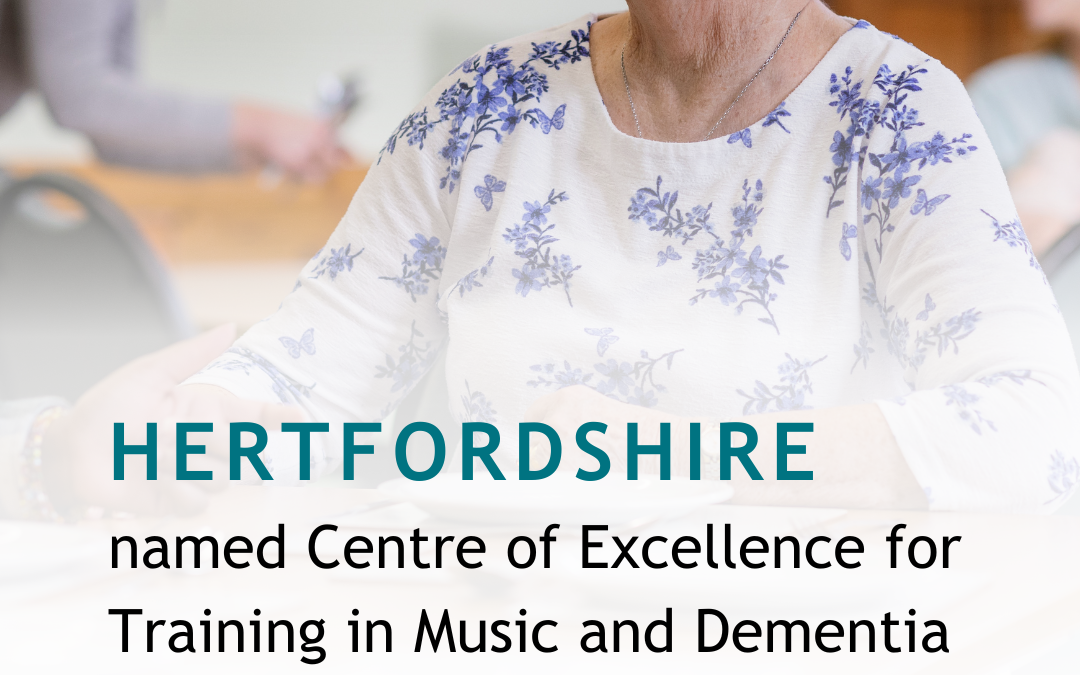
The Rayne Foundation is delighted to announce that Hertfordshire has been selected as the second Centre of Excellence for Music and Dementia through the Power of Music Fund.

The new Centre will focus on developing and rolling out a robust training package to support health and social care staff to integrate music into dementia care. It aims to create Music Champions within 100 care homes across Hertfordshire, training 6,000 staff to embed therapeutic music techniques, benefiting approximately 5,800 care home residents. The long-term aim is that this training could be rolled out to care home staff across the country.

The Centre will be led by Age UK Hertfordshire, in partnership with the Hertfordshire Care Providers Association (HCPA), Music24, Hertfordshire County Council and other expert organisations, and forming part of the Hertfordshire Dementia Strategy Delivery programme led by the Hertfordshire Mental Health, Learning Disability and Autism (MHLDA) Health and Care Partnership.

It builds on the work of the first Centre of Excellence for Music and Dementia, which was established in Manchester in 2024, led by Manchester Camerata. The first Centre supports community-based music cafes across Manchester, measuring their impact and their potential to improve lives and reduce pressure on the NHS.

The Power of Music Fund was established by the National Academy for Social Prescribing, and the second Centre of Excellence has been funded by the Rayne Foundation and the Utley Foundation.

Find out more here.

Part-Time Programme Officer Role Open for Applications – the Rayne Trust

Part-Time Programme Officer Role Open for Applications – the Rayne Trust

We are delighted to be welcoming applications for a new, part-time Programme Officer at the Rayne Trust. Working as part of our small team, this role will help take forward our emerging work on the future of community centres programme, ‘Where People Meet’. This programme aims to create locally led community spaces that support people in their communities to lead good, productive and healthy lives.

This role is available on a three-year contract, on a part-time basis (3 days a week). This is a hybrid role where the postholder will be based at the Fitzrovia office.

The application process is now closed.

Visit the Prospectus website for more details and to apply. 

The Rayne Trust
Privacy Policy

This website uses cookies so that we can provide you with the best user experience possible. Cookie information is stored in your browser and performs functions such as recognising you when you return to our website and helping our team to understand which sections of the website you find most interesting and useful.

Please see our privacy policy.